Design mockup · not a live service
AdmiralReporting Co. Scheduling (816) 555-0142
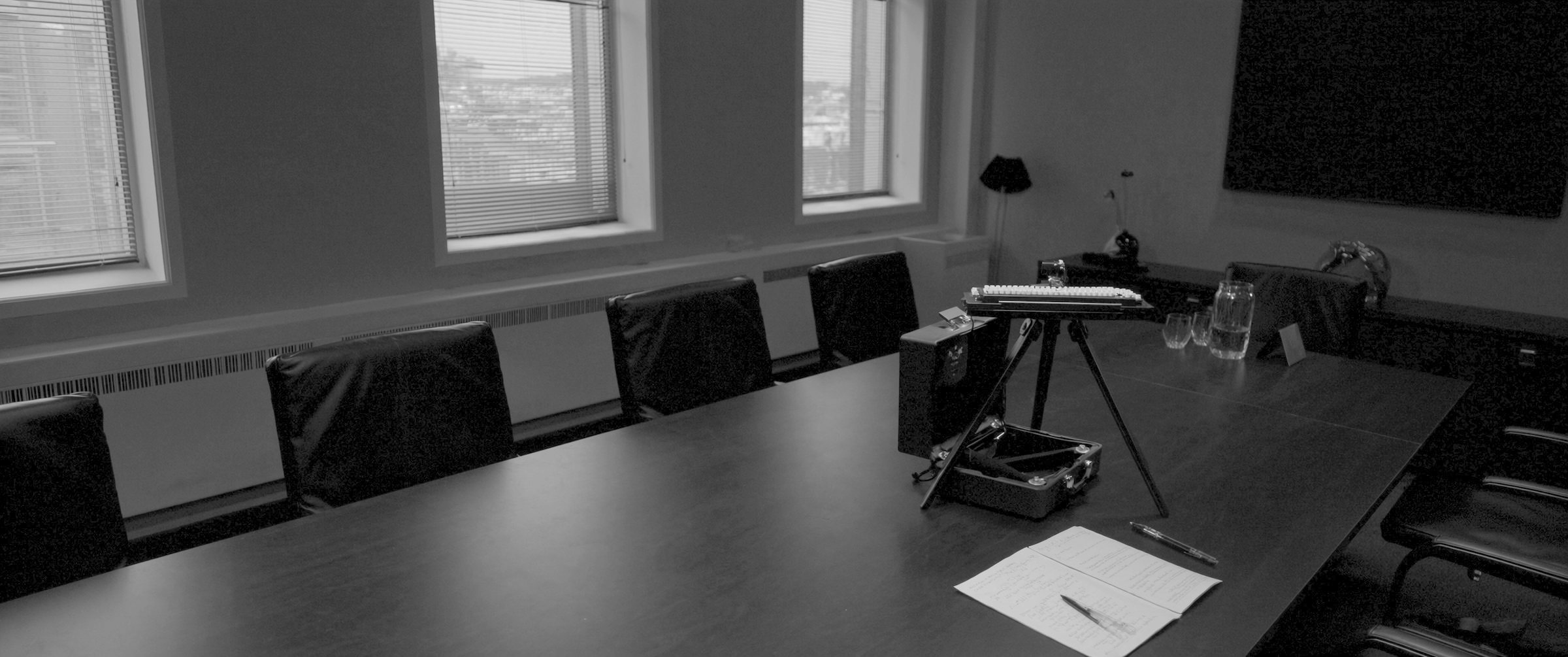
A stenotype machine on a tripod at the end of a long empty conference table, chairs pushed in, blinded windows behind it.

Court reporting · Kansas City, Missouri

Spoken once.
Rendered seven times.

A deposition answer exists in the air for about two seconds. Everything after that is a chain of custody: twenty-two keys, a dictionary, an audio track, two more sets of eyes, and a numbered page that somebody will read aloud years later. This page follows one sentence through every state it passes on the way out of the room.

Scheduling and coverage

The specimen

One sentence, taken at speed.

The witness says it once, in the middle of a long answer, while three attorneys are writing and one is hunting for an exhibit. Nobody in the room could repeat it. The reporter is the only record that it happened, and from here it has seven states to get through before it becomes a line anyone can cite.

Illustration. The sentence, the speakers and every figure on this page are invented for the mockup.

“Dr. Marchetti told me the seal was already cracked when the crew arrived.”

Length
2.4 seconds of speech
Written as
13 strokes
Risks
one proper name, one homophone

The chain

Seven states between the room and the file.

01

Air.

00:00:00

The only state nobody controls. The HVAC is running, one attorney is on speaker from another city, and the witness turns his head away from the microphone on the word that matters. The reporter is not transcribing later. The reporter is writing this while the next question is already being asked, which is why the machine is a machine and not a keyboard.
02

Chords.

+00:00:02

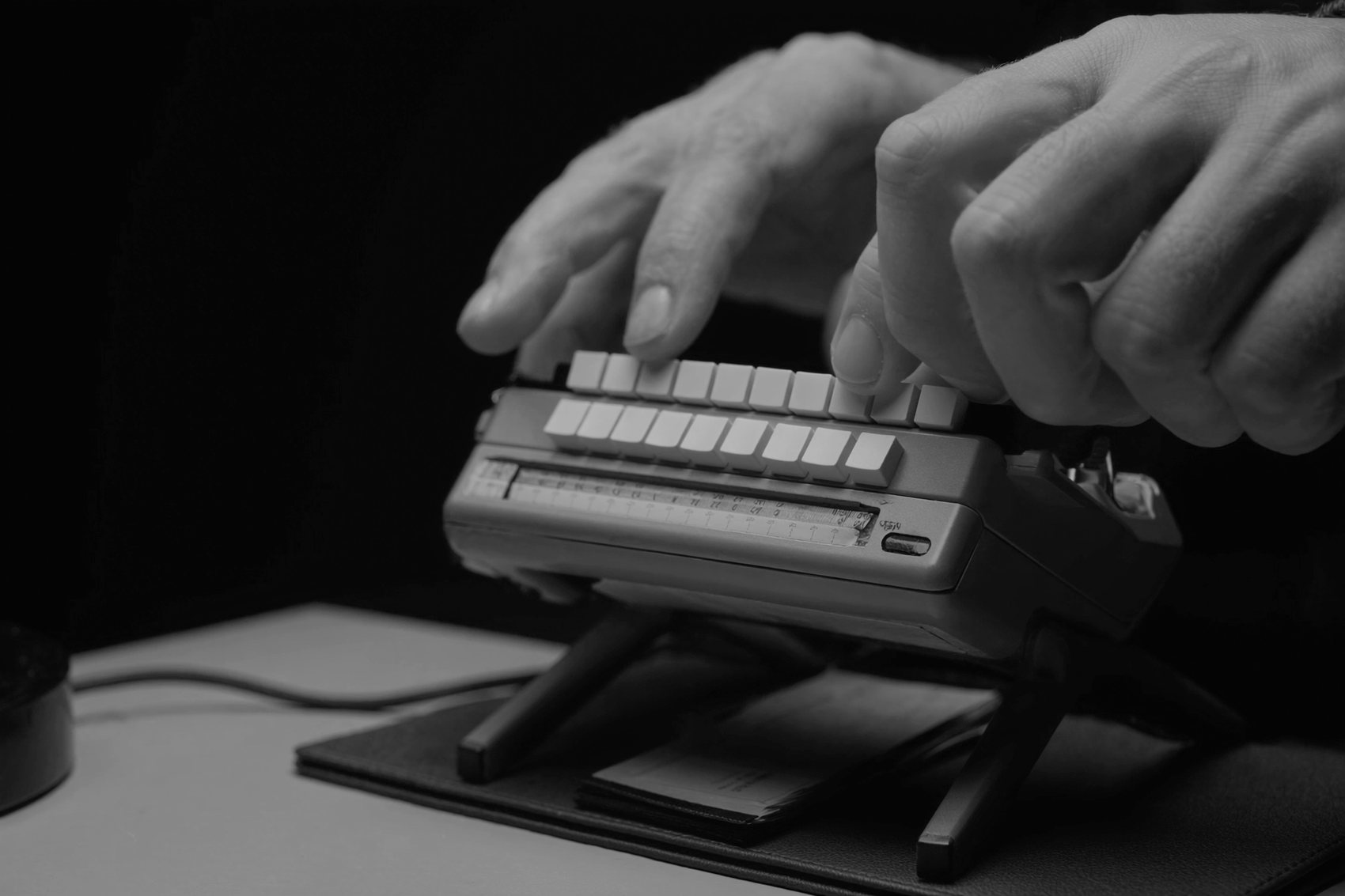
Twenty-two keys, no letters in the ordinary sense. Whole syllables come down as one press, several fingers at once, shortened further by entries the reporter wrote for themselves over years. Two reporters writing this sentence produce two different strings, and both are right, because the string is not the transcript. It is a pointer into a private dictionary.

Two hands on the flat blank keytops of a stenotype machine, its fanfold paper tray folding beneath it.

As written

TKR / PHAR KHET TEU / TOLD / PHE / -T / SAOEL / WAS / AURD / KRAOEUBGD / WHEPB / -T / KRAOU / ARVD

03

Raw translate.

+00:00:02

Software swaps each chord for whatever the dictionary says it means, fast enough that counsel on a realtime feed reads the answer while the witness is still finishing it. Two things go wrong here on purpose. A name nobody has entered comes through as raw steno, which is the honest failure: it is visibly not a word. A homophone written by sound lands as the wrong spelling, which is the dangerous one, because it reads perfectly.

On the screen, in the room

Dr. PHAR KHET TEU told me the seel was already cracked when the crew arrived.

  • Untranslate the name has no entry, so the strokes stand
  • Homophone written by sound, spelled by guess

04

Rough.

Same evening

State 03 saved to a file and handed over the same night, defects and all, because counsel prepping the next day’s witness would rather have eighty percent tonight than everything on Thursday. It is watermarked on every page and carries no certificate. Quote from a rough in anything that leaves your office and you are quoting a draft. We say that out loud every time we send one.

Rough draft, watermarked on every page

UNEDITED · UNCERTIFIED · NOT FOR CITATION
Dr. PHAR KHET TEU told me the seel was already cracked when the crew arrived.

05

Scoping.

Next morning

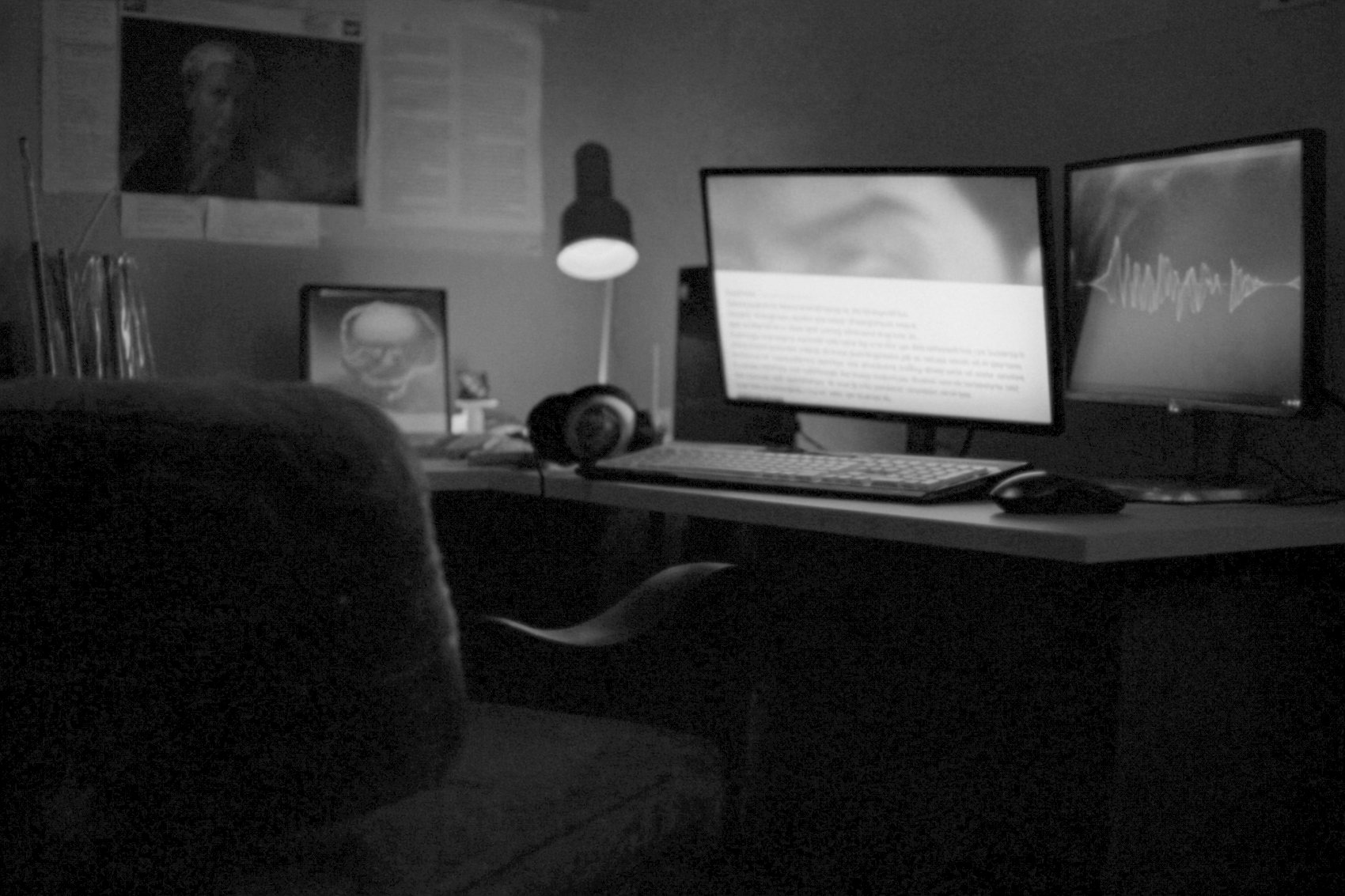
A second person plays the audio against the raw text on a foot pedal, at half speed where it matters. The untranslate resolves against the job dictionary, which is not a general dictionary: it is the spellings collected at the start of the day, the exhibit list, the company names, the two engineers whose surnames sound identical. The audio never becomes the record. It settles arguments about what the record should say.

A dark room lit by two monitors, one running an audio waveform and one a page of text over a paused video frame, headphones on the desk.

After the pass

Dr. Marchetti told me the seel was already cracked when the crew arrived.

06

Proof.

Next morning

The homophone survives the audio pass, because the audio agrees with it. It dies only when somebody reads for meaning and knows from four hundred pages of context that the day was about a pump and not about an animal. This is the state that cannot be automated away, and it is most of what a transcript costs: a person who read the whole day reading it again slowly, hunting the words that are spelled right and wrong at once.

Clean

Dr. Marchetti told me the seal was already cracked when the crew arrived.

07

The page.

Delivery

The sentence stops being a sentence and becomes an address. Page eighty-four, lines nine and ten, and from there everybody can point at the same two lines from four different offices. It goes out as a searchable PDF, as plain ASCII for whatever software wants it, condensed for the binder, and as a word index. The certificate closing the volume says who took it down and swears the transcript is what was said. That is the whole product. Everything above it is scaffolding.

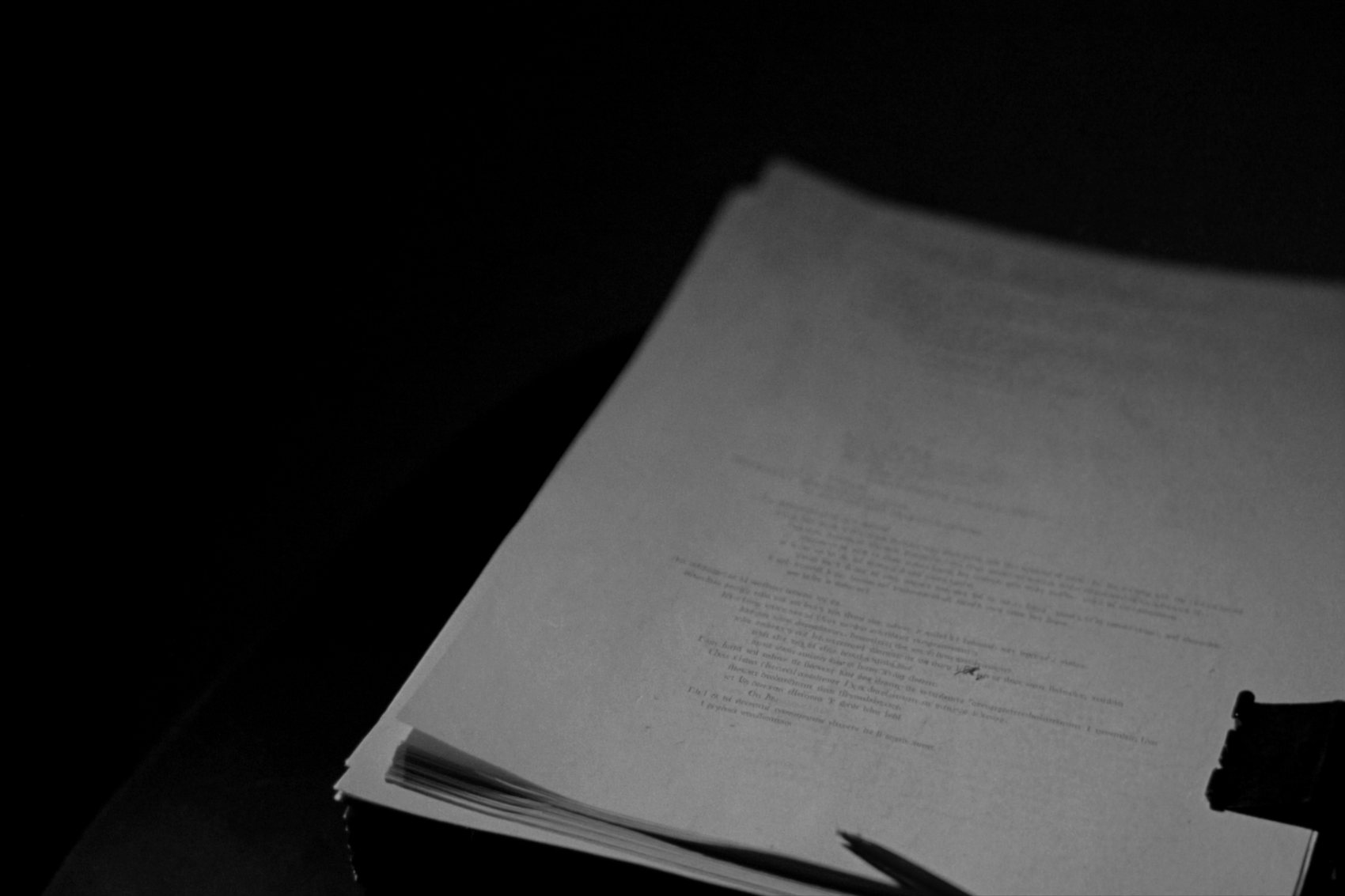
A thick stack of printed pages under a desk lamp, the top page too softly focused to read, a red pen across the corner.

Format illustration. Not a record of any proceeding.

 7      Q.  Tell me what he said about the seal.
 8      A.  He was pretty direct about it.
 9          Dr. Marchetti told me the seal was
10          already cracked when the crew arrived.
11      Q.  Those were his words?
12      A.  As close as I can get to them.
13      Q.  All right. Let's look at Exhibit 9.
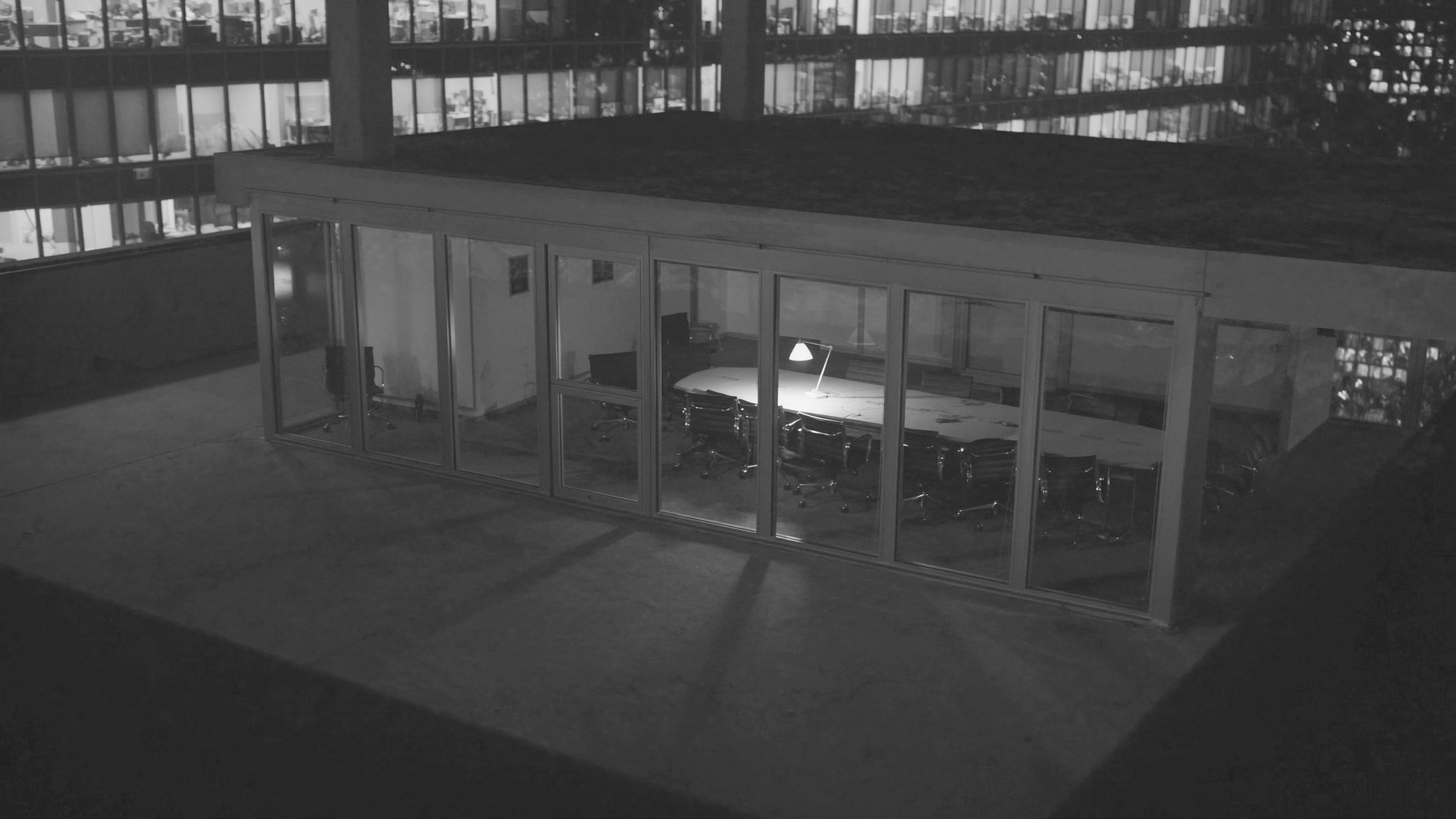
An empty glass-walled conference room at night, one lamp still burning over papers left on the table, lit windows in the tower opposite.

Seven forty, and the room is still going

The clock does not start when the transcript is ordered.
It starts when the witness stops talking.

The day runs long more often than not. Somebody flies out in the morning, somebody has a second session Thursday, and the question at the end is always the same: what can I have tonight, and what waits. That decision has a real cost on both sides, so we answer it before you ask, in the room, in plain terms.

What leaves, and when

Four ways out of the room.

Every figure below is a placeholder invented for this mockup, checked against no rate sheet, no court, no rule and no calendar, and none of it is legal advice. For what a filing actually requires, ask your own counsel and the clerk of the court you are filing in.

Illustration only. Every day count and every rate below is a placeholder.

Illustrative delivery options with placeholder turnarounds, formats and rate bases
DeliveryLeaves our handsCertifiedFormatsRate basis
Rough draft ~2 hours after the session No ASCII, watermarked PDF ~$0.00 placeholder per page
Daily ~06:00 the next morning Yes PDF, ASCII, condensed, index ~$0.00 placeholder per page
Expedited ~3 business days Yes PDF, ASCII, condensed, index ~$0.00 placeholder per page
Standard ~10 business days Yes PDF, ASCII, condensed, index ~$0.00 placeholder per page

The line we sit on

Five things we will not do, and one of them is answer your question.

  1. We do not tell you what a deadline is.

    Not for a filing, not for a signature window, not for an objection. A confident wrong answer from a vendor is worse than no answer. Your counsel knows, and the clerk of that court will tell you.

  2. We do not give legal advice, in the room or on the phone.

    Including the version that arrives as a friendly aside while everyone is packing up. If the question has consequences attached it belongs to a lawyer, and on this page it belongs to nobody, because this firm is invented.

  3. We do not certify what we could not hear.

    Crosstalk gets marked as crosstalk. An inaudible passage gets marked inaudible with its timecode, not smoothed over with the likely words. A transcript that reads cleanly because somebody guessed is the one defect nobody can find later.

  4. We do not let a rough leave without its watermark.

    Every page of a rough says what it is. Better to prevent it being mistaken for the transcript with a watermark than to argue about it afterwards.

  5. We do not take a job we cannot cover.

    Two sessions at the same hour in two counties gets turned down out loud, rather than becoming a scramble you find out about at nine in the morning.

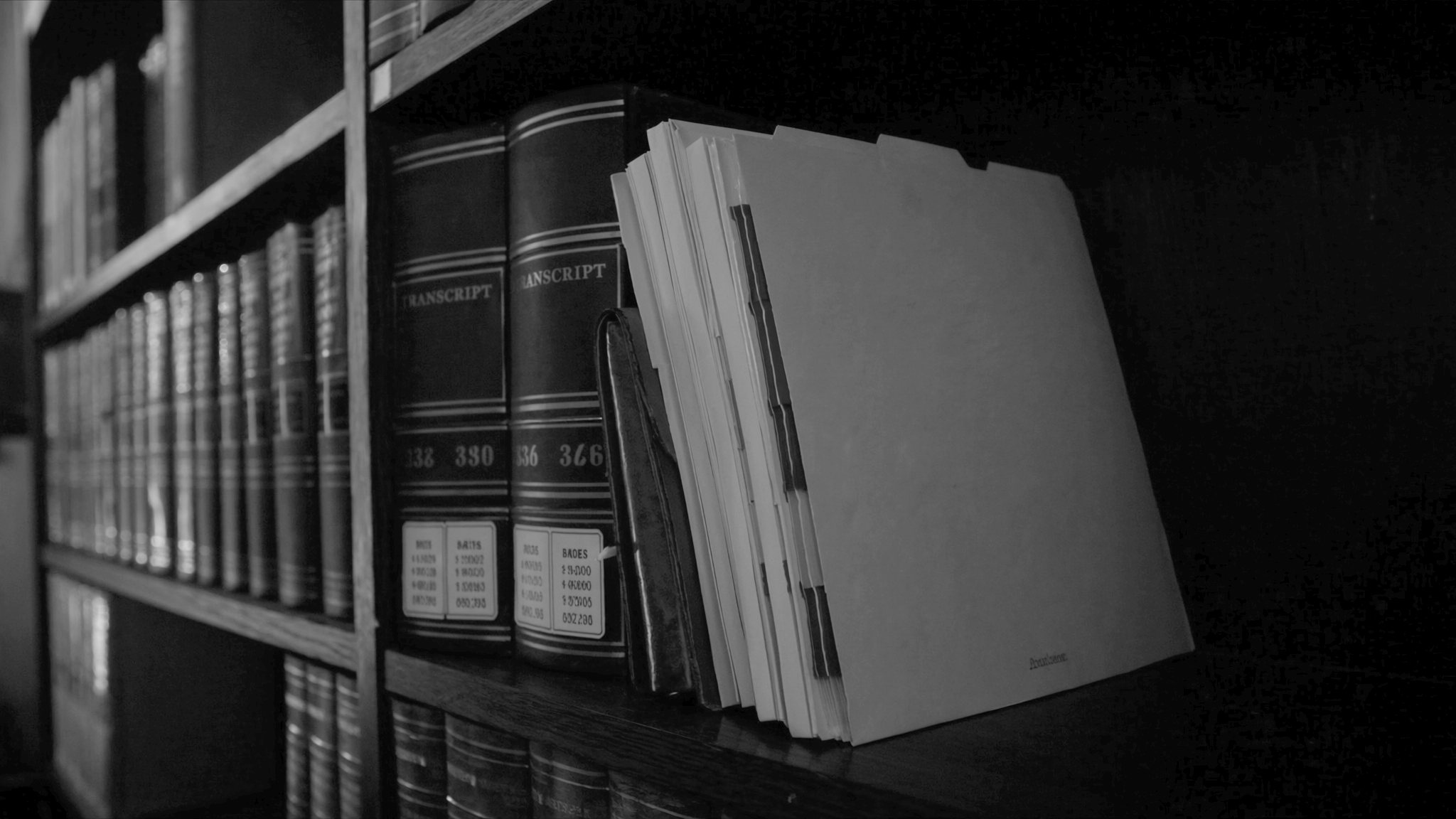
Bound volumes lettered Transcript on a dark shelf beside a file folder bristling with coloured index tabs.

Scheduling

Give us the date, the county and how long you think it runs.

That is enough to say yes or no the same day. If the answer is no, you will hear it in that call rather than a week out, and we will say who else in town covers that county.

Call (816) 555-0142
Scheduling
(816) 555-0142
Office
123 Main St, Suite 400
Kansas City, MO 64105
Desk hours
Monday to Friday, 7:30 to 5:30
Sessions covered outside those hours by arrangement
Coverage
Placeholder counties. Nothing on this page describes real coverage.